
The Sahiwal cow is one of Pakistan’s most famous and high-yielding dairy breeds, known for its rich milk production, gentle temperament, and strong adaptability to hot climates. Originating from the Sahiwal district of Punjab, this breed is valued for its resistance to diseases and low maintenance needs, making it ideal for small and large farmers alike. With its distinctive reddish-brown color, sturdy body, and excellent fertility, the Sahiwal cow continues to play an important role in dairy farming across Pakistan, India, and other tropical regions.
Origin and History of Sahiwal Cows
The Sahiwal breed is named after the Sahiwal district in the Punjab province of Pakistan. It belongs to the “zebu” group of cattle (these are cows with humps) and is native to the dry parts of Punjab. In past times, large herds of Sahiwal were kept by herdsmen called Junglies. As farming changed, more farmers kept smaller numbers for milk and draft work. Because the breed is strong and adapts well, it has been exported to many countries in Africa, Asia, Australia, and the Caribbean.
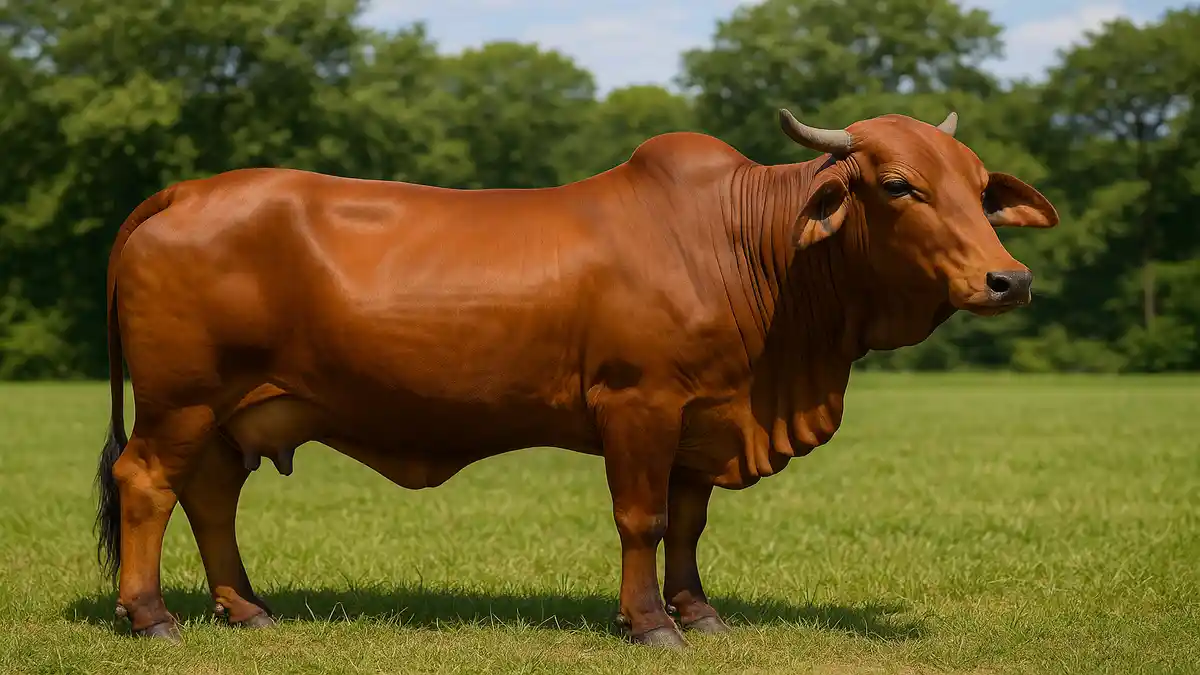
Appearance and Physical Traits of Sahiwal Cow
- Colour: The Sahiwal cow has a reddish-brown colour, sometimes with white patches under its belly or neck. The colour in bulls is darker, especially near the head, neck, legs, and tail.
- Size: Bulls weigh on average about 540 kg, and cows around 327 kg.
- Height: Bulls are taller, often about 170 cm at the withers; cows are shorter (around 124 cm).
- Other features: They have loose, fine skin, medium drooping ears, short horns, a pronounced hump (especially in males), and a good large udder.
Milk Production and Performance
Among all zebu (humped) cattle, the Sahiwal gives one of the highest milk yields. On average, a Sahiwal cow produces about 2,300-2,400 kg of milk per lactation. In good farm conditions, yields can go even higher. The milk has a good fat percentage, often around 4.8-5.1%.
Reproduction traits: First calving (first birth) happens around 40-45 months of age. The interval between calvings is longer than many European breeds, often 15 to 16 months.
Strengths of Sahiwal Cow Breed
Here are several strong points of the Sahiwal breed which make it a favourite for many farmers:
- Heat tolerance – Sahiwals do well in hot climates and dry weather.
- Resistance to parasites – They resist many ticks and internal parasites better than many exotic breeds.
- Good temperament – Generally calm and manageable.
- Dual purpose – While mostly dairy, they can also be used for draft work or for meat in some crossbreeding scenarios.
Considerations / Weaknesses
No breed is perfect. Here are some points farmers should consider:
- The breed has longer calving intervals and first birth age is later compared to some high-producing exotic cows. This means slower reproduction.
- Yield potential can depend heavily on good feed, water, and management. Under poor conditions, performance can drop.
- Because of its rustic origin, improving milk yield further often requires better breeding, good health care, and improved nutrition.
Why Sahiwal Cow Is a Great Choice
For many farmers in hot climates like in Pakistan, India, and similar regions, Sahiwal cows are often more profitable than exotic breeds. They survive well in heat, need less intensive care, and are less affected by local diseases. When managed properly, they give a good amount of milk with decent fat content. Also, for small farmers who cannot afford very expensive feeding or shelters, Sahiwal is a realistic and sustainable option.
Also Read: Sahiwal MPA MNA 2024