
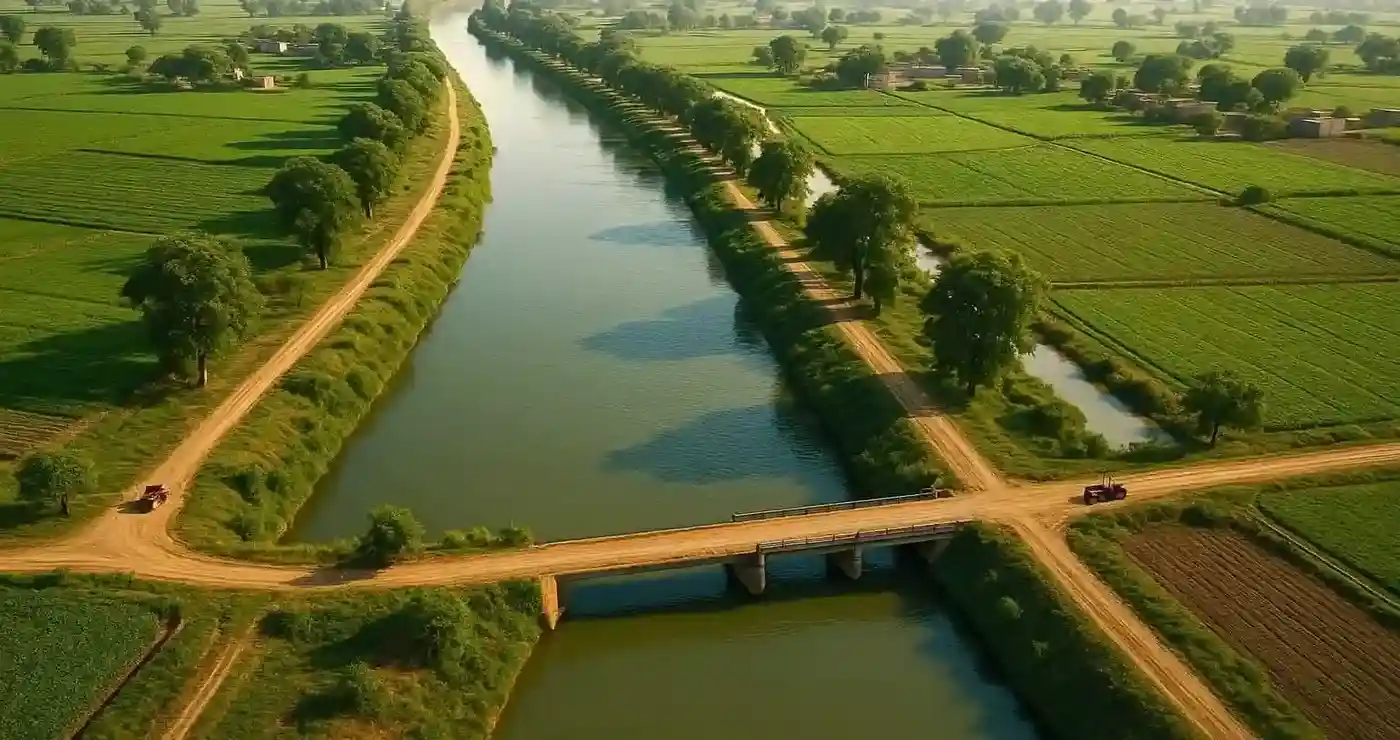
The Bambanwala-Ravi-Bedian (BRB) Canal, also known as the Ichogil Canal in Indian references, is a man made waterway in Pakistan. Originating from the Upper Chenab Canal (also known as Nandipur canal), near Bambanwala village, west of Daska, BRB Canal flows southeastward, running parallel to the India-Pakistan border before merging with the Sutlej River near Kanganpur, approximately 100 kilometers south of Lahore. Total length of BRB canal is around 200 Km.
Constructed in 19481, it was a proactive measure by the citizens of Lahore to fortify the city against potential future invasions. Responding to an appeal by the then Chief Minister of Punjab, Iftikhar Hussein, the local populace undertook the monumental task of digging the 8-kilometer canal without monetary compensation, completing it within a few days. the canal passing through Lahore, commonly known as the Lahore Canal, originates from the Bambawali-Ravi-Bedian (BRB) Canal.
BRB Canal and Indo-Pak War of 1965
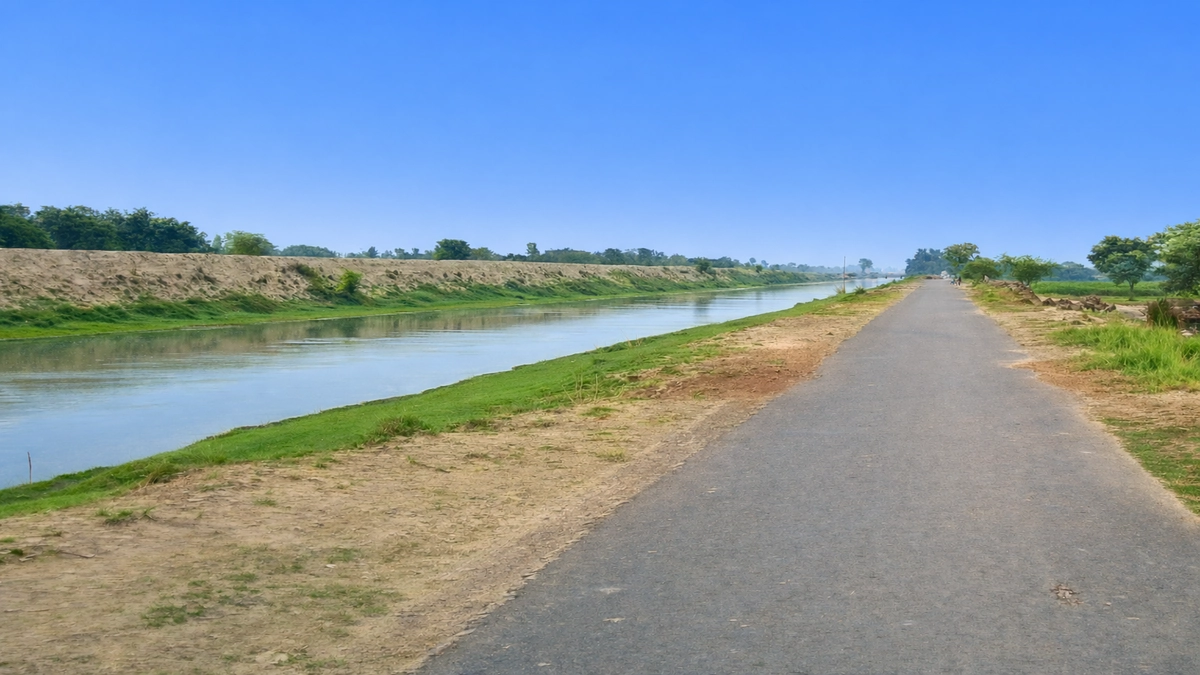
The BRB Canal played a pivotal role during the Indo-Pakistani War of 1965. As Indian forces advanced towards Lahore, the Pakistani army demolished all but eight bridges over the canal, effectively delaying the Indian military’s progress and providing crucial time for defensive preparations.
Major Aziz Bhatti, who was honored with the country’s highest military award, Nishan-e-Haider, for his bravery, embraced martyrdom during combat near the this canal in the 1965 war.
Irrigation and Agricultural Significance
The BRB Canal has been instrumental in supporting the agriculture sector of Punjab. By channeling water to fertile lands, it has sustained agricultural activities, particularly in regions surrounding Lahore. The canal’s continuous water supply has been vital for crop irrigation, contributing to the province’s agricultural productivity.
This Canal passes underneath the Ravi River through a siphon structure near Lahore. This siphon allows it to cross beneath the Ravi River without mixing water flows. Such structures are specifically designed to enable two water bodies to cross paths while maintaining separate flows, ensuring that the canal’s irrigation functions remain unaffected by the river above.
Pollution and Neglect of BRB Canal
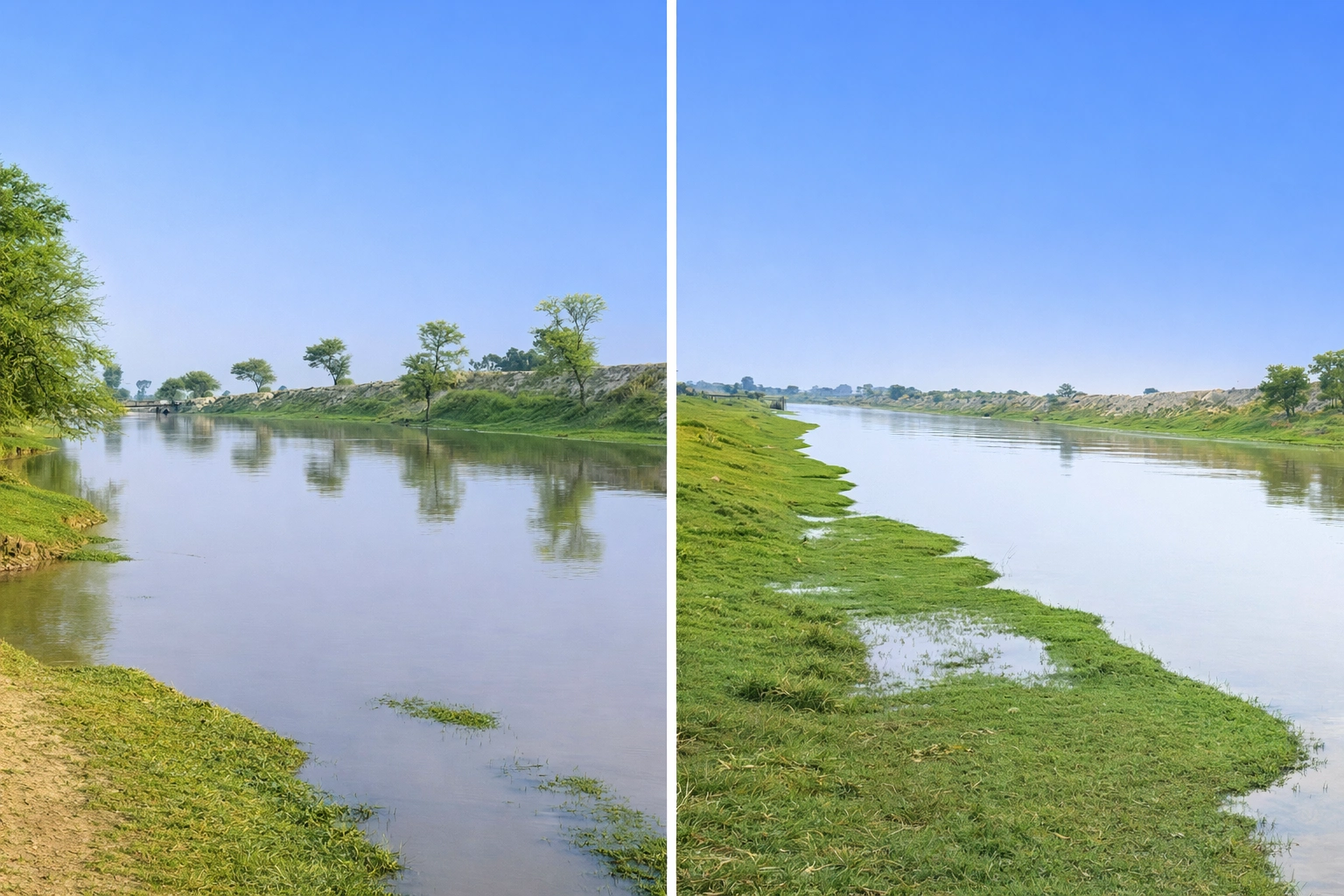
In recent years, however, the canal has unfortunately become a dumping ground2 due to sewage discharge and the disposal of household waste from nearby localities, including Jallo Mor and Attoke Awan. Given the considerable depth of the this Canal, waste isn’t easily noticeable when water is flowing. But once the canal flow is halted, it becomes clear that the canal is slowly transforming into a severely polluted drain, a situation exacerbated by inadequate desilting efforts from the relevant authorities.
Areas through which it passes
BRB canal passes through or near the following villages / towns:
- Bambanawala (Sialkot)
- Mallianwala
- Daska city
- Bheroke Kalan
- Lurhiki
- Manjipur
- Dhirke
- Mianwali Bangla
- Changi
- Bhagat Pur
- Sodagar Pur
- Malokey
- Gharyal Kalan
- Mehta Suja
- Chakrali
- Mandiali
- Kala Khatai
- Sidhan Wali
- Dhodea
- Bhaini (Lahore)
- Mandila
- Wahgrian
- Attoke Awan
- Dograe Kalan
- Jallo Morr
- Khaira
- Wara
- Padri
- Barki
- Karbath
- Heir
- Kirka
- Bedian (Kasur)
- Chathian Wala
- Leel
- Waighal
- Theh Panwan
- Tergay
- Katlohi Kalan
- Nathu Wala
- Patto Kalan
- Bhedian Khanpur
- Ganda Singh Wala
- Burj Kalan
- Mian Wala
- Mahalam Khurd
- Hussain Khan Wala
- Gohar Hithar
- Baqarke
- Khurram Hithar
- Jodh Jattan
- Mahalam
- Gohar Jagir
- Kili Sokal
- Dhirajke
- Janga Singh Wala
- Tibbi Mehtab Singh
- Mokal
- Kanganpur
Frequently Asked Questions | FAQs
What does BRB Canal stand for?
BRB Canal stands for Bambanwala-Ravi-Bedian Canal. The name represents its route from the village of Bambanwala near Daska, across the Ravi River area, and extending toward the Bedian region near the India-Pakistan border.
Where does it originate?
The Bambanwala-Ravi-Bedian (BRB) Canal is a man-made waterway in Pakistan, originating from the Upper Chenab Canal near Bambanwala village, west of Daska. It flows southeast, roughly parallel to the India-Pakistan border.
Why was this Canal constructed?
Constructed in 1948, the canal was built as a defensive measure to protect Lahore from potential invasions. Citizens voluntarily participated in digging an 8-kilometer stretch without compensation, completing it within a few days.
What is the total length of the BRB Canal?
It extends approximately 200 kilometers, flowing from near Daska through Lahore and ultimately merging with the Sutlej River near Kanganpur, about 100 kilometers south of Lahore.
What role did it play in the 1965 Indo-Pak War?
During the 1965 war, Pakistani forces demolished most bridges on the BRB Canal to delay the advancing Indian army, allowing crucial time for Lahore’s defenses to be organized effectively.
How it is significant for irrigation and agriculture?
The canal provides essential irrigation water to Punjab’s fertile lands, particularly around Lahore. Its consistent water supply sustains agriculture and supports crop production across multiple rural regions.
What environmental problems affect this Canal today?
In recent years, the canal has become heavily polluted due to sewage and household waste dumping, particularly from localities like Jallo Mor and Attoke Awan, worsened by poor desilting and waste management.
Which areas and towns does the BRB Canal pass through?
The canal passes through or near several towns and villages, including Daska, Kala Khatai, Barki, Bedian, Ganda Singh Wala, and Kanganpur, linking regions across Sialkot, Lahore, and Kasur districts.
What is unique about the canal’s structure under the Ravi River?
It passes beneath the Ravi River through a siphon system, allowing it to cross without mixing waters. This engineering design ensures uninterrupted irrigation flow despite the river’s course above.
References: